The Final, Definitive Piece on the Bluntness vs Subtlety Debate
And on a blog no one reads, no less. Maybe if I remembered to update it ever.
So a little while back, my brother sent me this piece from Freddie deBoer’s substack, titled “Please Stop Having Your Characters Just State the Themes of Your Show or Movie to the Audience, Thanks.” As that title suggests, deBoer is expressing weariness with the prevalence of films and TV that don’t trust their audience to infer meaning out of dialogue, image, and reference, and feel the compulsion to spell it all out for them. In particular, deBoer is responding to a 2015 piece by Forrest Wickman on Slate forwarding the opposite claim that subtlety is an overrated quality in media.
The two articles together constitute an interesting back-and-forth on the state of contemporary culture, each having incisive points to make, though of the two I find Wickman’s more persuasive. DeBoer criticizes Wickman for not seeming to understand the cultural moment he was writing in, one deBoer diagnoses as replete with brick-to-the-face bluntness.
I wonder what Wickman thinks when he watches a film like Glass Onion, which has something to say and also zero faith that its audience can piece that together for themselves. I find the tendency artistically unfortunate because it removes the inspiration for mental work that abstract and difficult art sometimes achieve; I find it insulting because it seems to presume that I don’t have the capacity to figure anything out without direct coaching.
This argument is fair enough, but deBoer, whose post is focused primarily on contemporary popular movies and TV, is mostly talking past Wickman, who is addressing a broader trend in media criticism, not popular consumption. The first main example Wickman cites is the critical reception of Jonathan Franzen’s novel Purity, which was widely (though not universally) bemoaned for not being as subtle as Franzen’s previous work. Wickman is able to attribute Purity‘s unsubtlety to its emulation of Dickens, who wrote in an era before subtlety was defined as a signifier of good craft in literature. And here is the real point of Wickman’s article: that subtlety is a relatively new value that arose with the advent of widespread literacy.
[A]fter the industrial revolutions and educational reforms of the 19th century led to an explosion in the literate population, the Modernists drove meaning deeper and deeper below the surface, with some of them explicitly hoping to wall off their work from the masses.
So, deBoer is talking about what is popular and profitable while Wickman is talking about what is deemed sophisticated. No doubt, deBoer would argue that the popular does not need to be defended from the critic class (because it already has the best defense, money), and Wickman would say meta-criticism of critical trends is a useful endeavor nonetheless to promote self-awareness in how we analyze. And both would be correct. But both do still leave me somewhat at a loss to understand one important thing that is a vital point in both their arguments.
What is subtlety?
We, of course, do know what people mean when they evoke subtlety; I’m less confident that we can establish a strong consensus on a general definition that would satisfy all persons and parties feelings on which works are subtle or unsubtle. Wickman does define the term, if with an unhelpful reference to Merriam-Webster, which glosses “subtle” as meaning “hard to notice or see; not obvious.” That’s a clear enough meaning, but a subjective one–which is how art tends to work, not to spoil where we’re going. DeBoer doesn’t bother to give an exact accounting of what he means by “subtle” either, just a description of the secondary effects of subtle strokes, namely the inspiration they provoke.
But Wickman, ultimately, is not so much discussing subtlety per se as he is calling it out for a rhetorical flourish, and therefore need not be so concerned with what it is as with why it gets deployed. DeBoer is trying to make the case for subtlety as a particular quality, which is probably why I find his piece the less strong of the two.
This is not to say that deBoer’s argument is bad or useless. He spends the bulk of his word count complaining about the movies and TV he didn’t like for being unsubtle, and the practice of complaining about a thing you didn’t like is a noble and time-honored tradition. I’m serious. Reporting on personal taste or group taste is a totally worthwhile endeavor, if sometimes uncritical of how said taste was formed. This, again, is what Wickman’s article is about, the formation of subtlety as a signifier to fence out the masses from the pastures of good taste.
But deBoer’s report of taste does give us several examples of purportedly subtle and unsubtle filmmaking, and here is where I got confused about what specifically he, and by extension other people, mean by subtlety. Ostensibly, deBoer is focused on the trend of films that have their characters outright state their themes, except he actually isn’t. Lots of movies and shows are brought up on the generic charge of being unsubtle. For example, he says: “Nobody says a word in the recent horror-sci fi movie No One Will Save You, but you could not possibly watch the film without understanding that the real monster is trauma, man.” Comments like this make one suspicious that deBoer’s real issue is at times not so much with overtness as it is earnestness.
As an example of a piece of media that is subtle, or in his exact words, “restrained,” deBoer points to Richard Linklater’s 2014 Boyhood. It’s been a while since I’ve seen that film, but I do remember crisply the scene in which Patricia Arquette’s character, reflecting to her son on the long series of milestones that make up a life, declares, “You know what’s next, huh? It’s my fuckin’ funeral!” See, it’s a movie about aging. Maybe that scene is unrepresentative of the rest of the film (though just for reference, in an earlier scene Arquette’s character also says, “I was somebody’s daughter, and then I was somebody’s fucking mother”). But I would argue that Boyhood is a “naturalistic” movie rather than a subtle one.

What is subtle, then? Is the ending of The Graduate subtle? Its final shot has no dialogue in which to rudely state the theme or ideas, only mood conveyed through Katharine Ross and Dustin Hoffman’s acting and the soundtrack, but I doubt somehow most viewers would say it’s subtle for how clearly it conveys that Benjamin and Elaine’s elopement is a bad, impulsive idea. And deBoer has already pointed out that a film can still be quite overt in the total absence of dialogue.
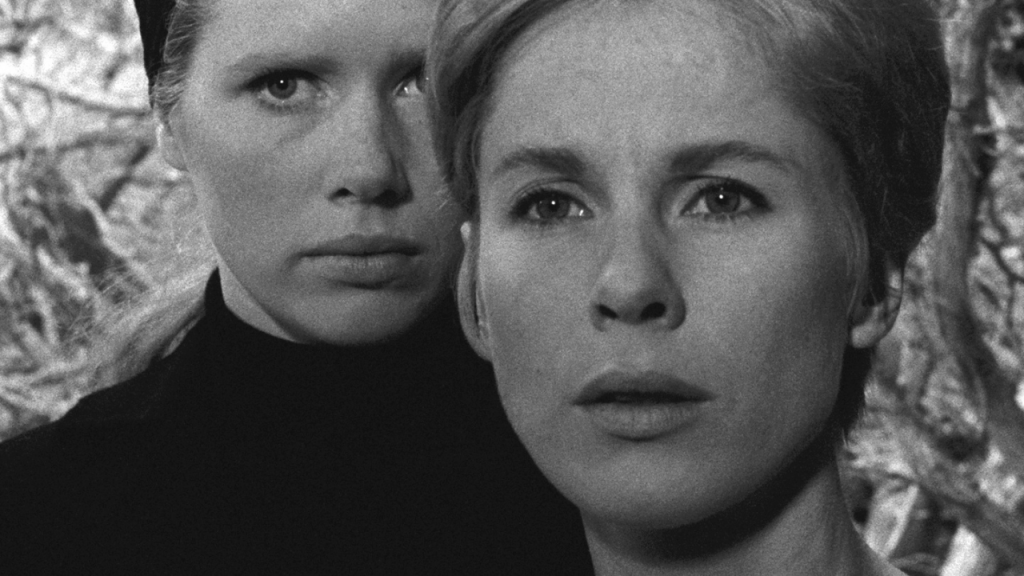
Is Ingmar Bergman’s Persona subtle? If a sure sign of the unsubtle is that everyone clearly gets the message, then the variety of interpretations that Persona elicits (that it’s about God, or split personality, or lesbianism, or movie-making itself) would suggest that it is playing a subtle game. But while it does allow space for diverse interpretation, I wouldn’t strictly say that it’s a subtle movie either, as its gestures are hardly “hard to notice.” See for example the speech that the doctor (Margaretha Krook) delivers to Elisabet (Liv Ullmann), the actress who has fallen suddenly and inexplicably silent:
“I understand you, Elisabet. I understand that you’re not speaking or moving, and that you’ve turned this apathy into a fantastic setup. I understand and admire you. I think you should play this part until it’s played out, until it’s no longer interesting. Then you can drop it, just as you eventually drop all your other roles.”
I would submit that, in general, the dramatic monologue tends to be an unsubtle form of speech that automatically calls attention to itself as inorganic and dramatic.
But perhaps, if and when they call Bergman’s filmmaking subtle, people are thinking instead of the film’s visuals. The shots that, through framing and visual effects, overlap and blend together the faces of Liv Ullman and Bibi Andersson are indeed the centerpiece of a film that is driven more by the progression of their characters’ dynamic than by the progression of the plot. But are these images “subtle” or merely ambiguous and surreal in the way that they suggest how the characters Elisabet and Alma become absorbed in each other? I do not think that subtlety and ambiguity are the same thing. Interpreting the visual elements of Persona may be difficult and lead to divergent perspectives, but they are elements that obstreperously demand to be interpreted. They’re hard to miss.

I think I can safely assert when Granny (Angela Lansbury) in The Company of Wolves tells Rosaleen (Sarah Patterson), “Some wolves are hairy on the inside,” that this is an unsubtle image in the larger context of this story about nascent female sexuality. But, hot damn, what an image it is! Better by far than “a wolf in sheep’s clothing.”
And here’s the knife I’d like to use to cut through the subtlety vs bluntness debate. Because I think we can all agree (or rather I will argue and you all can agree with me or not) that whether or not The Graduate or Persona or The Company of Wolves are subtle or unsubtle films overall, they are all making effective use of imagery in telling their stories.
That imagery may be coming from the performers’ expressions as it is with Katharine Ross and Dustin Hoffman’s acting in The Graduate; it may come out of the more formal elements of filmmaking, from the shots composed by a film’s director and cinematographer, as with the images Bergman and Sven Nykvist create in Persona; or the image could be evoked verbally, as with the line about wolves what are hairy on the inside, written by Angela Carter and delivered Angela Lansbury.
In all instances, the image is more powerful than straightforward, literal description could be because of how it snags the audience’s emotions in addition to their rational intellect. It’s aesthetic! It’s dramatic! It’s cinema! (Or poetry!)
So if there is a version of deBoer’s argument that I’m on board with, it is about how many contemporary big-budget flicks (which represent a bloating percentage of all films being screened in theaters, with mid-budget dramas more frequently shunted directly to streaming where they are liable to be lost amid the ocean of content most platforms offer their viewers) are uninterested or unambitious about using imagery to engage their audience, develop their themes, or tell their story. But that’s not quite the argument deBoer is actually making.
The best example of a movie sinning against its audience in deBoer’s piece is actually taken from Jen Chaney’s review of Cat Person for Vulture:
Robert turns out to be a total Star Wars nerd who’s obsessed with Harrison Ford and insists on taking Margot to see The Empire Strikes Back on their first date. When he sends Margot a compilation of film clips that includes the first kiss Han imposes on Leia in that sequel, it’s apparent that Robert was raised to believe nothing is more romantic than a man giving a woman “what she really wants” despite her protests. Like so much in Cat Person, this observation would carry much more weight if Margot didn’t immediately explain that subtext for the audience.
Chaney and deBoer grate justifiably at the film’s aversion to letting an idea remain subtextual; but what strikes me as more offensive is that the translation of an idea communicated first through other film references into explanatory dialogue betrays a mistrust of the ability of moving pictures to portray ideas at all. Or maybe they just mistrust the willingness or ability of audiences to engage purely with the visual.
I wouldn’t even call Cat Person‘s explicit reference to Han Solo’s–let’s call it “aggressive wooing style” subtext, as Chaney does. That’s just text communicated through a visual rather than verbal message. We’ve all seen Star Wars, and (with, I’m sure, several holdouts) we’re all mostly on board with the idea that its gender politics are rather chauvinist and retrograde by today’s standards.
Cat Person‘s missteps (in a film Chaney notes is at other moments successful) may betray a saddening lack of faith in its own medium, but more insidious by far is the experience Lucretia Martel describes, speaking with The Pioneer, about when she was approached by Marvel to potentially direct Black Widow:
They also told me “don’t worry about the action scenes, we will take care of that.” I was thinking, well I would love to meet Scarlett Johansson but also I would love to make the action sequences.
Assuming the veracity of Martel’s account, it certainly feels telling that a studio producing an action movie would not want the film’s director to direct the action scenes, the putative central spectacle that justifies audiences shilling out to see the film on the big screen.
Martel attributes a gendered cause to this snub, speculating that, “Companies are interested in female filmmakers but they still think action scenes are for male directors.”
This may well be, though an equally likely explanation might be that the high volume of VFX shots used in those films, the amount of time those take to render, and the tight and inflexible development timeline for these movies whose banked-on big box office haul necessitates the effects starting development before a director is officially signed onto a project. A VFX artist writing in Vulture reports insane demands from Marvel projects for effects houses to rework sequences close to the date of a film’s release. The anonymous artist ascribes this problem in part to the film’s directors having a poor understanding of how visual effects are made and how to visualize from rough renders what a finalized effect will look like.
Martel and the anonymous VFX artist’s accounts speak to a studio that is uninterested in facilitating a good working relationship between the people creating its movies and uninterested in producing visually cohesive or stylistically creative images. That is, it only cares about the image as money-making and perhaps pleasure-making, not as something meaning-making for real humans (this being, I think, roughly the idea Martin Scorsese articulates in more depth in his essay for the New York Times).
So maybe my opinion has been too shaped by low expectations, but in this current Marvel-dominated movie landscape I can’t help but feel that many of the films deBoer selects to deride are actually ones that are committed creatively to the inherent power of the image, notably so, even.
To pick on just one example, deBoer cites the Daniels’ 2022 Everything Everywhere All At Once as “the worst offender” when it comes to theme-in-mouth disease. He doesn’t cite the specific lines that irked him, instead sweepingly estimating, “When they need a dramatic beat, somebody just says some maudlin synopsis of the movie’s view of the world to somebody else.” And we needn’t pretend not to understand what he’s indicating. The movie is earnest, and who can argue that it won’t be too saccharine for some people?
But stepping outside the confines of personal taste, we can all recognize that it is also a film that is thematically grounded in its visual style, I think effectively. Much ink has been spilled on how the Daniels’ team created the film’s special effects through naught but pocket lint, sweet dreams, and elbow grease, but also critically and popularly appreciated were how those effects combined with busy editing to communicate the chaotic, verging-on-overwhelming day to day life that Evelyn (Michelle Yeoh) is trying to navigate–even before the verse-jumping premise is introduced.
And with the introduction of those alternate realities with their alternate Evelyns, there even comes to be a fruitful comparison to be made between the visual codes of EEAAO and Bergman’s masterpiece, Persona. Both films develop themes of the allure of some other self, pivoting on dissatisfaction and regret with previous life choices. Alma and Elizabet’s lives oppose one another in regards to the pursuit of personal fame and the choice to have children. Evelyn’s life is littered with unfulfilled ambitions, unlived lives or moments that the film flashes between using the sci-fi premise of verse-jumping. Unsurprisingly then, both films make heavy use of the the image of the human face merging with or fracturing from its other self. The effect in both cases is a created sense of instability, of the danger of potentially becoming lost in the unresolvable “what if?”
I don’t want to overstate the comparison here. Obviously these are extremely different films, especially tonally. Persona is an eery, quiet drama; EEAAO is a frenetic action comedy. (Which is another reason on its own I find it a little funny to complain that the movie’s dialogue is too overt. Is that not standard for the genre?) Persona is an all-time great movie that became a cornerstone for the genre of the psychological thriller in particular, but really also for all of cinema. EEAAO was a fun breath of fresh air by the standards of 2022, though for all I know, it too could wind up having a long-lasting impact on cinema. But we’ve yet to find out.
But deriding the Daniels’ work for being too overt is both dismissive to the intellect of my parents, who have said multiple times that they could not follow it, and to the film’s style as a whole, which consists of creative choices beyond just the dialogue.
There are times, such as in the case of Cat Person, where we may be able to concur that a piece of dialogue has “transgressed” by over-explaining an element that already spoke for itself. More often, however, it is probably best to at least start from the assumption that an element we don’t like is not a malfeasance, and to treat it as an intentional, stylistic choice. Overtness can be just that. In our case study of EEAAO, it makes sense for the dialogue to be so straightforward and ernest to compliment the chaotic flurry of images. That’s… kind of the whole point of the film? That statements of love and care need at times to be loud enough to cut through the rest of the noise.
So in conclusion, what is subtlety? I’m still not sure, but sort of like porn, I’ll know it when I don’t see it.
But even if we cannot pin that definition down to some mutual satisfaction, we may at least rest assured that there is more richness to engage with in film, a primarily visual medium, if you can talk yourself into getting over more straightforward dialogue elements. Treating dialogue alone as the be-all, end-all of cinematic narrative craft feels as misguided as treating “subtlety” as the ultimate signifier of quality. Both leave too much more “what” and “how” and “why” to engage with.
And indeed, if there is an aspect of arts discourse in which I would like to plant my little curmudgeon flag, it’s that audiences do not seem primed to accept art on its own terms right now, and are more trained to rationalize things they don’t like as flaws than to try and first understand them as perhaps sensible and intentional. I’m dubious on how much audiences can be held accountable for what films and shows studios choose to greenlight, advertise, and screen in cinemas. But that kind of attitude can certainly be held up as an excuse not to throw more support to projects that are deemed riskier. To get over that knee-jerk reaction, we have to sit next to rather than within our personal taste, an act that requires some expenditure of emotional vulnerability, and look at the whole picture. Some movies are hairy on the inside.

 Cognito Mode